

12.12 Is Coming: Is Your Brand Ready for the Complaints?
By Bianca Flor L. Ulan, MBA
Every December I see the same pattern at otherwise well-run brands. Orders jump during the 12.12 sales, delivery windows stretch, and by mid-month the comment sections are doing the work the customer service team should be doing.
This year, the platforms and regulators are paying closer attention, and so are your customers. That changes how much an unanswered complaint costs.
WHAT'S HAPPENING?
Three developments from the past few weeks are worth putting side by side.
TikTok is handing brands their own listening tools. On October 28, TikTok launched a Brand Safety Center at its APAC Responsible Media Forum in Singapore, together with a Brand Protection Playbook and an AI Safety Essentials guide. Two of the accompanying tools matter for reputation. TikTok Market Scope Brand Perception, found in Business Center, shows how much people are talking about a brand, how they feel about it, and which topics keep coming up. TikTok Real lets brands selling on TikTok Shop review seller authorizations, get alerts on suspicious listings, and remove confirmed counterfeits. TikTok also reported removing more than 30 million videos across 10 Asia Pacific markets from April to June 2026.
Shoppers are being trained to check before they buy. In the same week, TikTok Shop and the Department of Trade and Industry (DTI) ran the #TikTokShopSmart consumer education campaign for Consumer Welfare Month, ahead of the 11.11 and 12.12 sales. The message to shoppers: read the product description, the customer ratings, and the seller information before checking out.
The DTI is watching product quality online. Earlier in October, Trade Secretary Cristina Roque flagged the number of uncertified products sold on e-commerce platforms and reminded holiday shoppers to look for the PS mark or ICC sticker. For context, the DTI received more than 13,000 complaints about online transactions from January to August 2025 alone, and the Internet Transactions Act, fully enforced since June 2025, expects online sellers to give consumers an accessible way to seek redress.
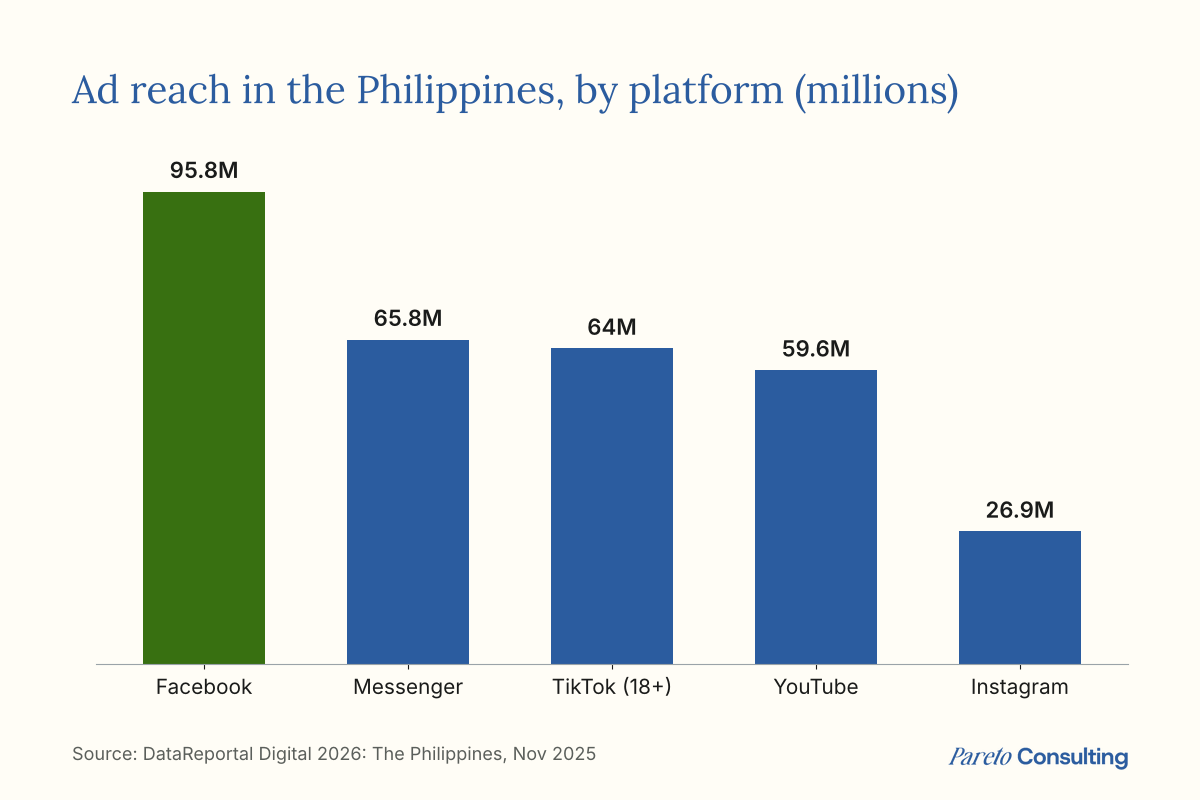
Now add scale. DataReportal counted 95.8 million social media user identities in the Philippines in October 2025. Facebook ads reach 95.8 million people, Messenger 65.8 million, TikTok 64.0 million adults, and YouTube 59.6 million. A complaint can land on any of them, in public.
WHY IT MATTERS IF YOUR FEED ALREADY GETS COMPLAINTS
If your brand sells at volume (retail, telco, delivery, utilities, consumer finance), three things follow.
- Your complaint history is now part of your product page. When shoppers are told to read ratings and seller details first, the unresolved complaint under your last post is part of the purchase decision.
- Complaints are scattered, and public. A support ticket is private. A complaint on a TikTok video or a Facebook post is read by strangers, many of whom never become customers because of it.
- "We didn't see it" is harder to defend. When the platforms themselves offer sentiment and counterfeit tools, customers and regulators reasonably expect brands to be listening.
MY TAKE: THE MISTAKE MOST BRANDS MAKE
Most brands treat complaints as a volume problem: fewer visible complaints means a better reputation. That belief leads to two bad instincts. The first is hiding or deleting legitimate comments. The second is drowning them out with a wave of positive posts or, worse, fake reviews. Both backfire. Filipino online communities notice quickly, screenshots outlive deletions, and at Pareto we simply won't do either.
Here is the 80/20 view. In my experience, most reputational damage comes from a small share of complaints: the ones that sit unanswered in public, or get a copy-paste reply that goes nowhere. You do not need to win every comment. You need that small set of high-visibility, unresolved complaints to reach someone who can actually fix them, quickly, and you need people to see that you did.
A Five-Step Playbook Before the 12.12 Rush
1. Map where your complaints actually live.
Pull last December's mentions across your Facebook page, Messenger, TikTok comments, TikTok Shop and marketplace reviews. Rank channels by volume. Usually two channels carry most of the load, and that is where your attention goes first.
2. Switch on the tools you already have.
If you advertise on TikTok, check Market Scope Brand Perception in Business Center. If you sell on TikTok Shop, set up TikTok Real and the IP Protection Center, because complaints about counterfeits sold under your name usually get blamed on you. On Facebook, use moderation filters for spam and abuse only, never to bury genuine complaints.
3. Write a routing map, not a reply script.
For your top five complaint types (late delivery, wrong item, refund, defect, counterfeit), name an owner, an official channel, and a response target. A good public reply does three things: acknowledges, gives a case reference, and moves the conversation to official support.
4. Close the loop in public
Once an issue is resolved, add a short follow-up in the original thread, with the customer's permission. One visible resolution earns more trust than ten generic apologies.
5. Report weekly, and fix the root cause.
Keep it to one page: volume by channel, the top three themes, percentage resolved, and sentiment trend. If the same courier delay or misleading listing photo drives 200 complaints, fix that once instead of answering it 200 times.
How We Help at Pareto
Our Reputation Management service uses real, disclosed brand advocates who monitor mentions, route complaints to your official support channels, amplify your brand's own posts, and report sentiment every week. No fake reviews and no hiding complaints. We run enterprise reputation management and media buying for a major Philippine telco, a category where complaint volume never really slows down, and the same discipline carries over to any brand bracing for a holiday rush. We work in one-week sprints, so the scope can flex as December unfolds.
Get ready before the rush, not during it
If 12.12 makes your customer service team nervous, let's map your complaint hotspots together while there is still time to act. Book a free 20-minute call with me, or see our work first.